
Proud to be Sri Lanka’s most trusted hospital for compassionate and quality healthcare
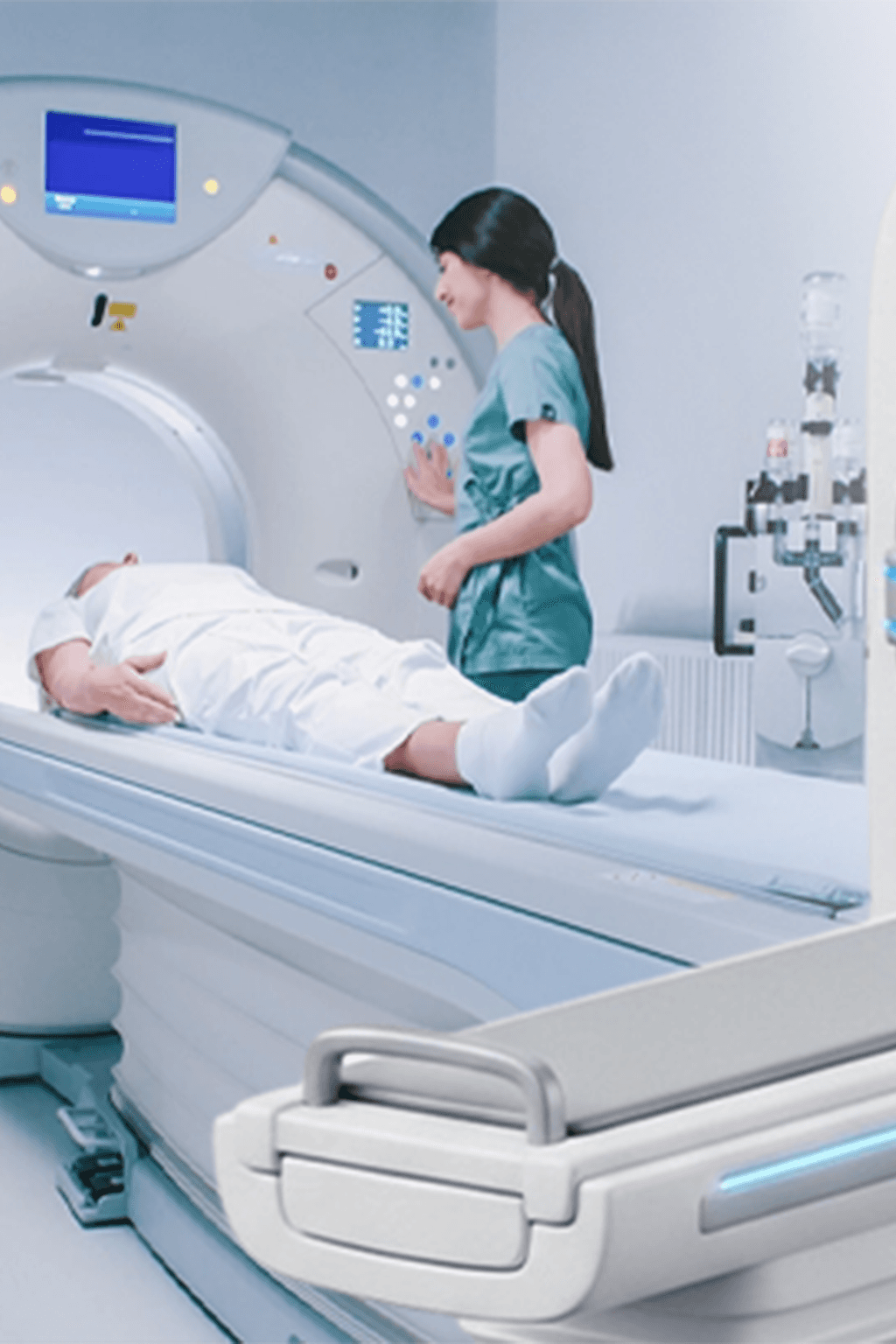
Computed Tomography scanning combines multiple X-ray measurements taken from different angles to produce cross-sectional images of bones, blood vessels, and soft tissues inside your body. Our department features a state-of-the-art multi-slice CT scanner capable of acquiring many individual slices per rotation, completing a whole-body trauma scan in seconds and a cardiac CT in a single heartbeat. This ultra-fast scanning dramatically reduces motion artifacts, minimizes radiation exposure, and eliminates the need for sedation in anxious or pediatric patients. Key applications include Head CT for stroke, hemorrhage, skull fractures, and brain tumors; Chest CT for lung nodules, pulmonary embolism, interstitial lung disease, and pulmonary conditions; Abdomen and Pelvis CT for appendicitis, diverticulitis, kidney stones, liver lesions, pancreatitis, and tumors; Spine CT for fractures, disc herniation, and spinal stenosis; Musculoskeletal CT for complex fractures and joint abnormalities; CT Angiography for visualizing arteries to detect aneurysms, dissections, and stenosis; and CT Urography for kidney stones and urinary tract tumors. Our scanner features iterative reconstruction algorithms that maintain image quality even at lower radiation doses, tin filtration for ultra-low-dose lung cancer screening, and dual-energy capabilities allowing material characterization such as distinguishing different types of kidney stones and detecting gout. All scans are interpreted by board-certified radiologists with fellowship training, and critical findings are communicated immediately to your referring physician. We maintain full PACS integration - your images are available to any doctor in our network within seconds and can be shared digitally for second opinions.
What makes our CT service exceptional is our obsessive focus on radiation safety without compromising diagnostic quality. We follow the ALARA principle - As Low As Reasonably Achievable - using automated exposure control and organ-based tube current modulation to reduce radiation dose to sensitive organs. For pediatric patients, we use dedicated child protocols that significantly reduce dose compared to adult settings. We achieve motion-free imaging even in uncooperative patients using fast gantry rotation speeds. Our contrast allergy reaction rate is very low, and we have virtually eliminated contrast-induced kidney complications because we screen all at-risk patients and use intravenous hydration protocols. We offer radiation dose tracking for every patient with lifetime cumulative dose reporting - you receive a dose summary with every report. For claustrophobic patients, our wide-bore scanner and ambient lighting with music systems reduce anxiety; we also offer oral or intravenous sedation when needed. Our turnaround time for non-emergency outpatient CT reports is efficient, with emergency scans reported even faster. For patients from out of town, we can arrange same-day scan and report.
Before your CT scan, remove all metal objects including jewelry, glasses, dentures, hairpins, bras with underwires, and belts with metal buckles. For abdominal or pelvic CT, you may need to drink oral contrast before your scan to help outline your bowel. For CT angiography, an intravenous line will be placed for iodinated contrast - tell us if you have any allergies, asthma, kidney disease, diabetes, or if you are pregnant. CT is generally avoided during pregnancy unless absolutely necessary. For kidney stone CT, no preparation is needed other than drinking water to fill your bladder. For CT colonography, you will need bowel preparation similar to regular colonoscopy. During the scan, you lie on a motorized table that moves through the donut-shaped scanner. You will hear a whirring sound - this is normal. The technologist will ask you to hold your breath for short periods at certain times. The scan takes only minutes. If contrast is used, you may feel a warm sensation throughout your body, a metallic taste in your mouth, or a feeling of needing to urinate - these sensations are normal and last less than a minute. After the scan, you can resume normal activities and eating immediately. If you received intravenous contrast, drink extra fluids to help your kidneys eliminate the contrast. Diabetic patients on metformin may need to temporarily stop the medication after contrast administration. Breastfeeding patients do not need to pump and discard - only a tiny amount of contrast enters breast milk.